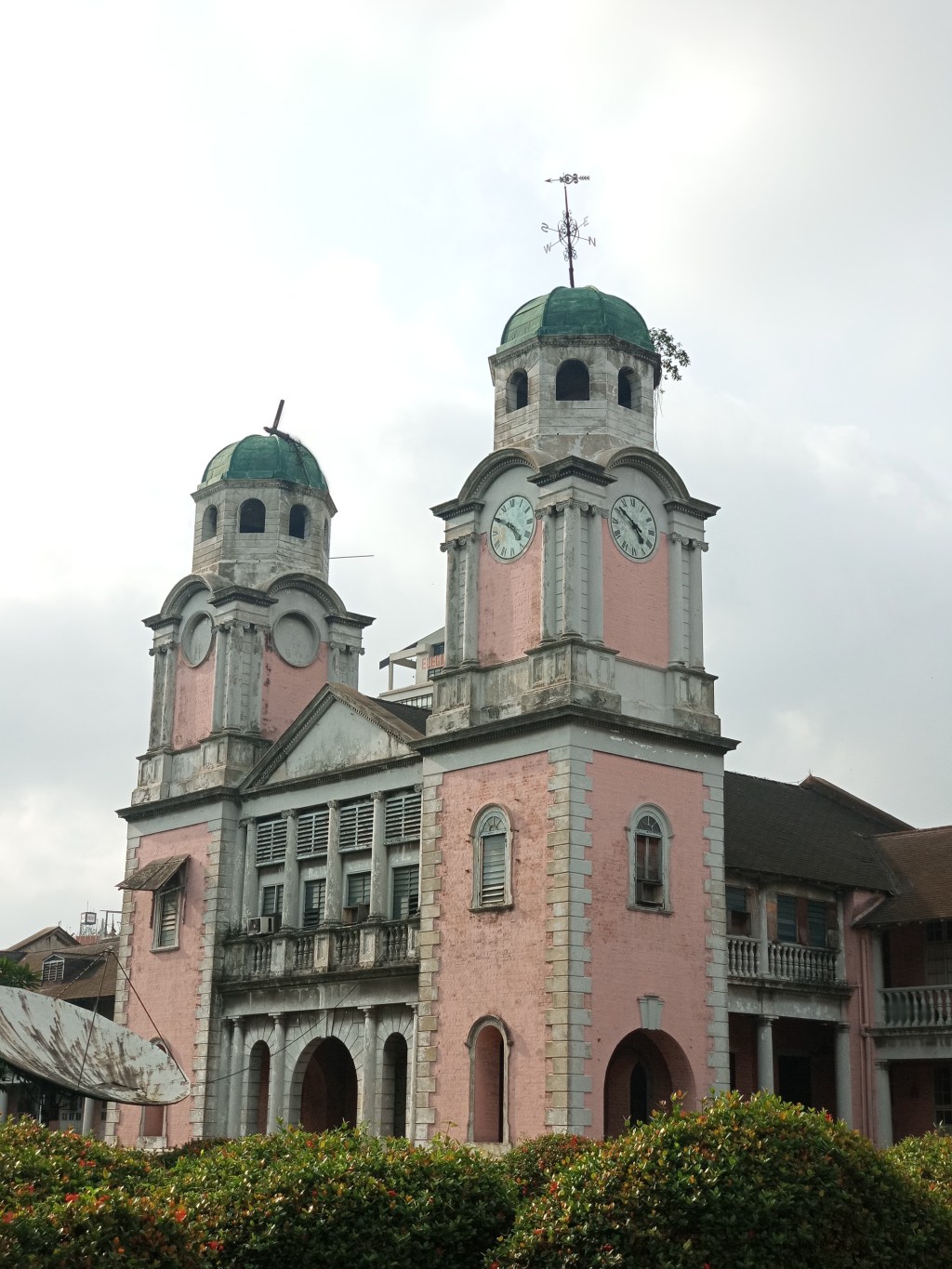
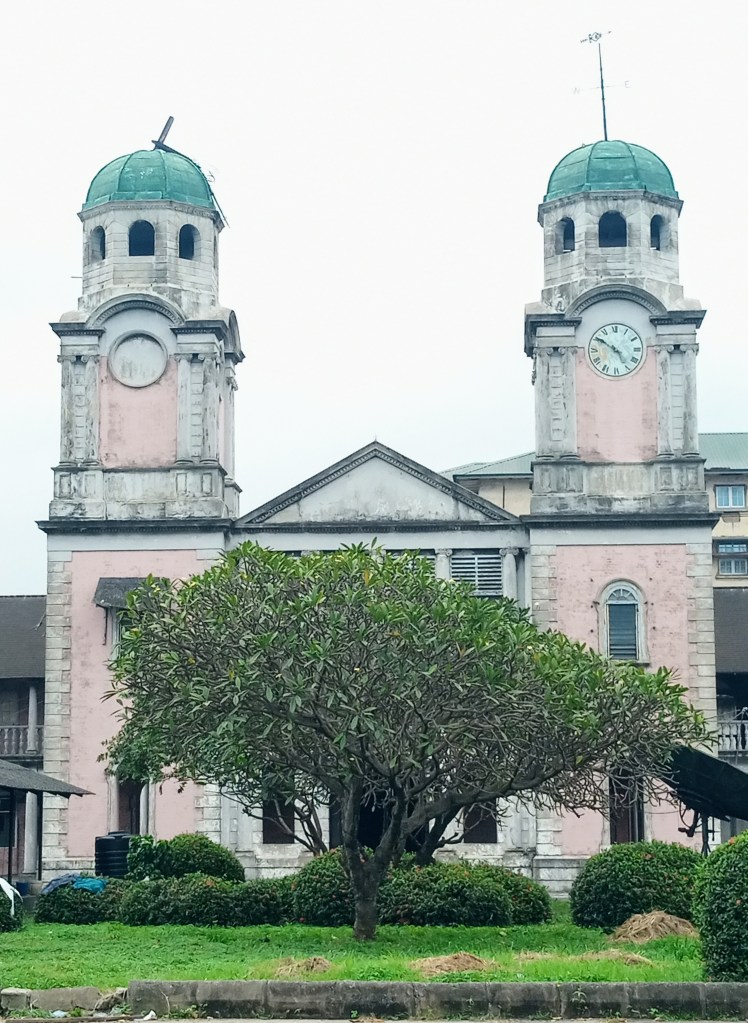
One of the early examples of Nigerian colonial public buildings still stands tall on 14 Marina Street, Lagos, South-West Nigeria. The Lagos Old Secretariat, more than a century old, sits on a site of up to two acres. It was built to house the British colonial administration of the then Southern Protectorate of Nigeria.[1] The Old Secretariat once called the Central Secretary’s Office[2] was designed and constructed by PWD, the public works department responsible for many colonial administrative buildings in the country.[3]
The location of the old national secretariat in Marina, Lagos was significant as it was formerly the seat of administration of the Lagos colony and subsequently the capital of the Southern Protectorate of Nigeria created in 1906.[2] Unsurprisingly, the Lagos Marina, plays host to similar imposing historic administrative buildings. The Government House and Government Printing Press are some of the old colonial structures that still stand in Lagos Island today.[4]
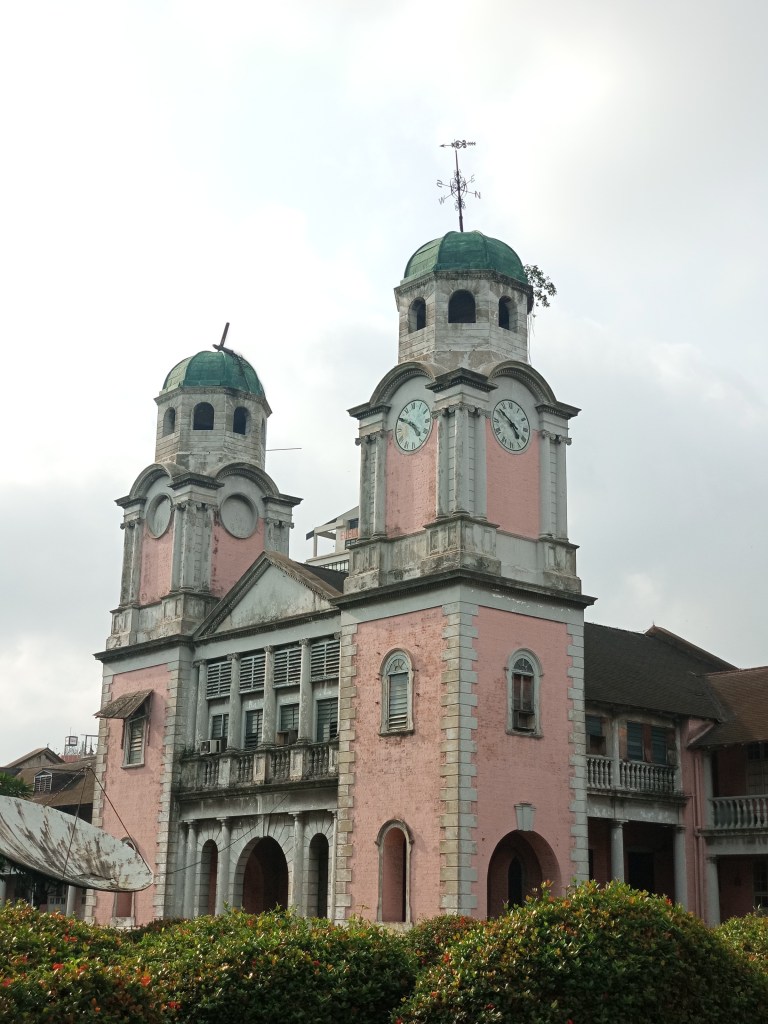

At the site’s gate, one is immediately struck by the imposing ambience of order and authority the building exudes -features synonymous to its typology. The concepts of symmetry and repetition are apparent to the observer on the slender columns, large windows and dominant arches.
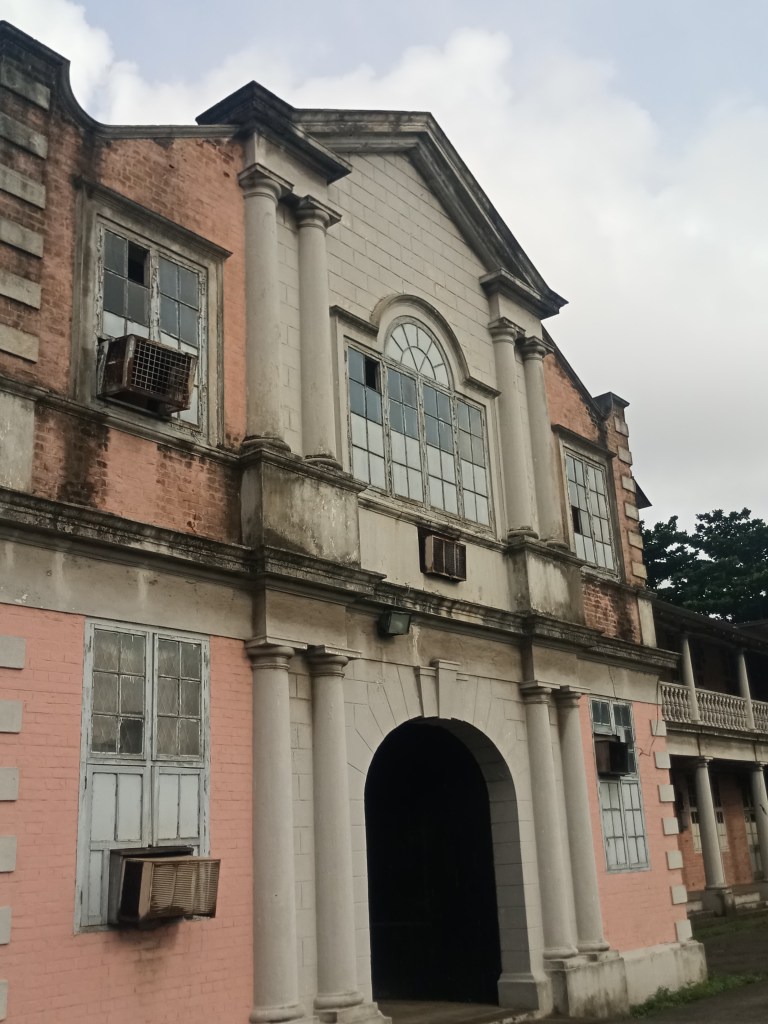
The site is laid out with a central rectilinear courtyard defined by a U shaped plan. The building layout is symmetrical and can be seen clearly as one approaches the entrance to the site. A circular garden is at the centre of the courtyard, together with two single floored blocks beside it. There are three defined points of entry into the building. Each entry is centrally located on the elevations of the U shaped layout. The main entrance is at the building’s centre and opposite the site entry. It is differentiated by twin towers which are absent on the other entrances. At the ground floor level of the entry is a large central semi-circular arch flanked by an arched opening on its sides. Throughout the building, the arches are present at various entry points.
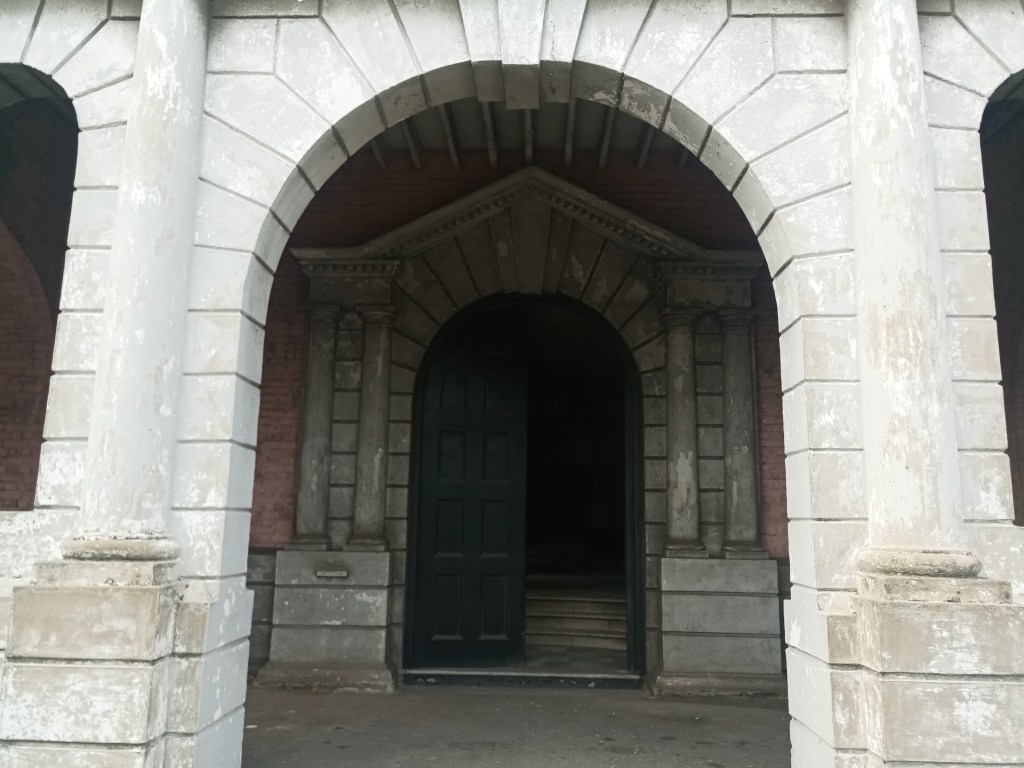
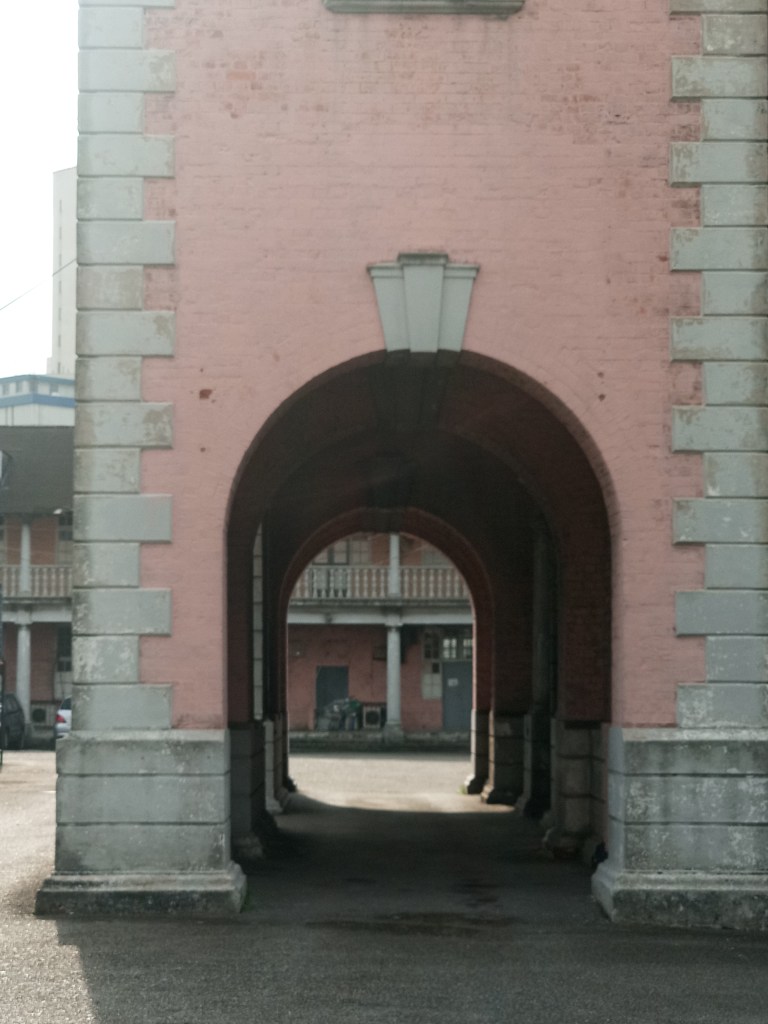
Four embedded Doric columns define the entry wall. These Doric columns are repeated and aligned on the wall of the floor above, with shutter windows between them. They rest on rectangular base similar to those on the ground floor. The pediment is defined by wooden cornices and marked by perforated moulding along the edges of the plain tympanum.
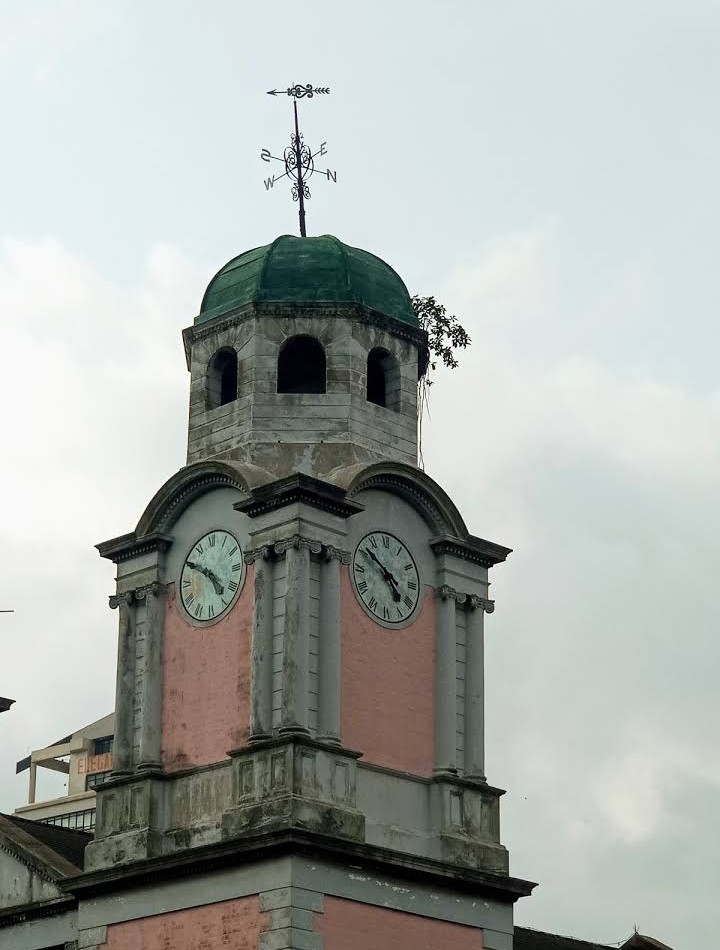
The towers are separated by cornices into three parts. Above the tower base is the signature arch opening. Quoins line the edges of the towers from the base up to where they abut at the bottom of the pediment. Above this is the part of the tower that houses the clock recesses centred on all four sides of the tower. A pair of composite Corinth columns on rectangular bases are also found on the four edges. A dome sits at the top of each tower and covers the watch stations, possibly used as security posts.
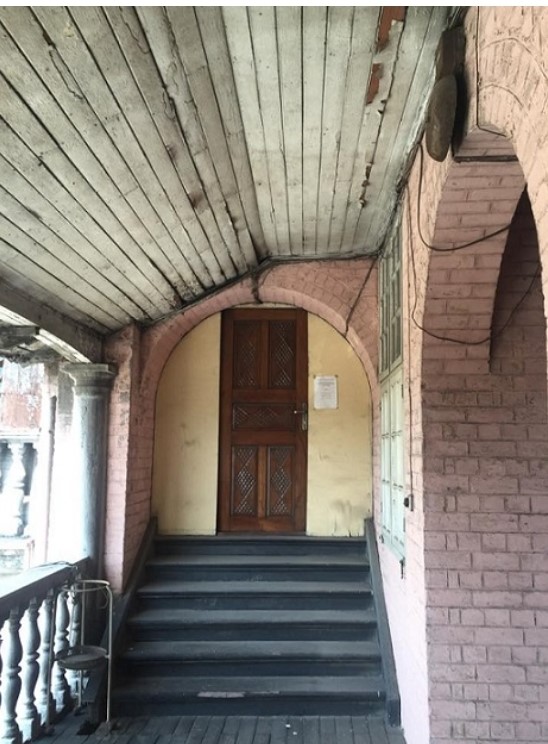
A wide hallway stretches along the front and rear of the 3000 square meter building. It is supported by Doric columns on each floor, placed at intervals of about 3.6m. These intervals are continued in the interior spaces with similar columns between them. The verandas are complete with series of vertical balustrades placed between these columns.
The building materials are mainly wood and brick. The bricks were sourced overseas and bore the armorial bearings (‘broad arrow’) stamp of the Quartermaster General of Britain that appeared on all British government properties.[7]

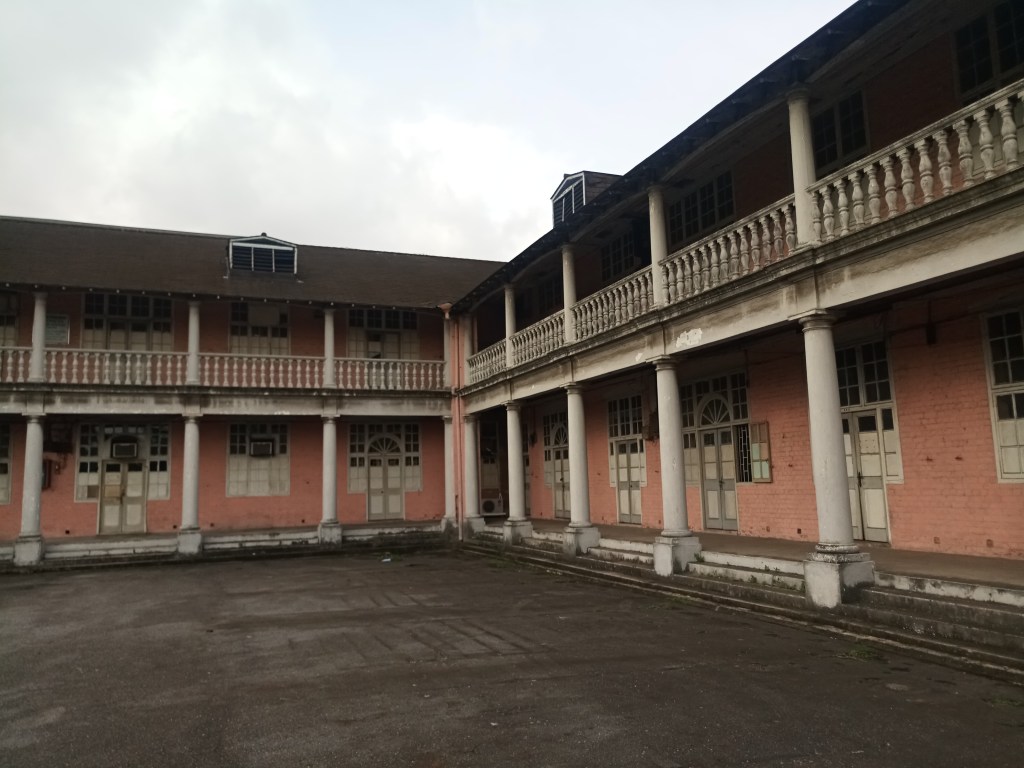
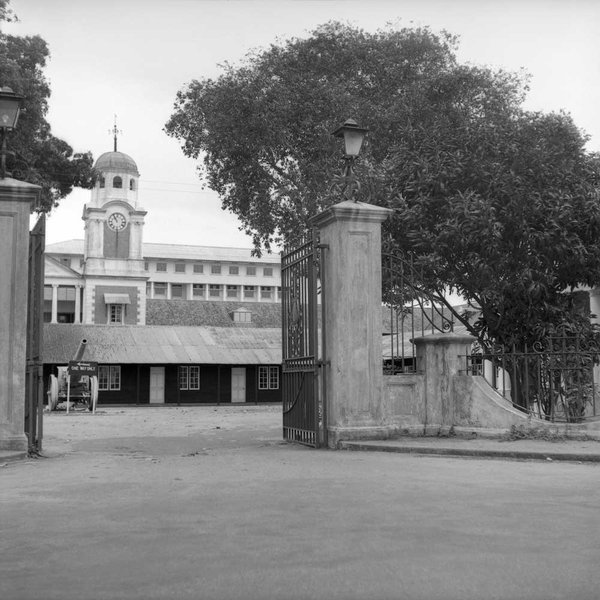
The building is a typical example of the British colonial architecture style in Nigeria. It is one that was conceived to fit the warm and humid climate of Lagos. The long-spanning pitch roof with sharp eaves above large veranda spaces shades the occupants and living spaces from the sun and heavy rainfall. Just as the shutter windows and air vents on its roof facilitate better air movement and ventilation throughout the building.
The Old Secretariat remains a notable built structure in Nigeria’s architectural history. It was lauded at the time for its architecture and role in portraying imperial Britain’s colonial might. Margery Perham, a renowned British historian of colonial Africa, praised the building as ‘the most handsome building of its kind I have yet seen in British Africa.[4]
It functioned as an administrative building after Nigeria’s independence from colonial rule in 1960. It became the headquarters of the Federal Ministry of Justice. However, in 1991 when the Nigerian capital was moved to Abuja, it served as a zonal office for the ministry till present-day.[9] It also houses the National Secretariat for the Nigerian Council of Retired Federal Permanent Secretaries (CORFEPS).
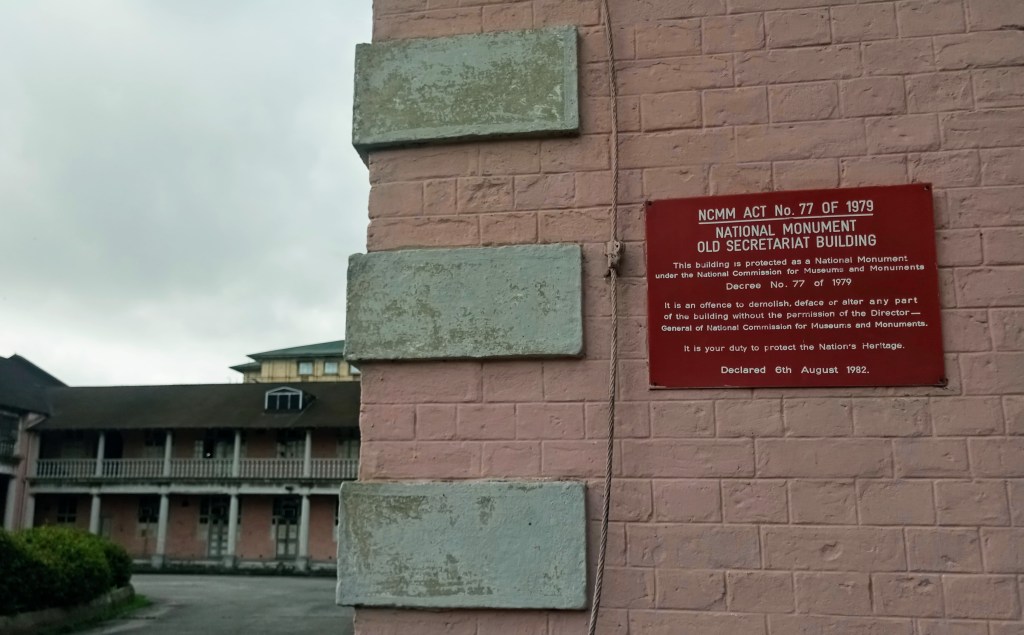
The Old Secretariat retains its position as a notable historic building in Nigeria and was declared a national monument by the National Commission of Museums and Monuments in 1982.[10] In spite of its evident public appreciation and continued use, the building tells a tale of neglect and poor maintenance. Unfortunately, no deliberate action for restoration is in view.
ENDNOTES
[1] Ogunlade FO. Education and Politics in Colonial Nigeria: The Case of King’s College, Lagos (1906-1911). Journal of the Historical Society of Nigeria 1974; 7(2):325-345
[2] Heap S. The Nigerian National Archives, Ibadan: An Introduction for Users and a Summary of Holdings. History in Africa 1991; 7:159-172
[3] Salami IO. The Architecture of the Public Works Department (PWD) in Nigeria During the Early to Mid-Twentieth Century ((Doctoral dissertation, University of Liverpool).
[4] Whiteman K. Lagos: A Cultural History. Interlink Books,2014
[5] Ozoz Sukoh,2019
[6]ArcGIS. “Street layout of Marina, Lagos”. Accessed on 1 November 2020 http://www.arcgis.com/home/webmap/viewer.html?useExisting=1
[7] Lost in Lagos. Self-Guided tour of Lagos island. Available from https://www.lostinlagos.com/gist/159 (Accessed on 23 July 2020).
[8] Litcaf. Old Secretariat. Available from https://litcaf.com/old-secretariat/ (Accessed on 23 July 2020).
[9] Federal Ministry of Justice, Federal Republic of Nigeria. Federal Ministry of Justice Zonal Offices. Available From https://www.justice.gov.ng/index.php/the-ministry/zone-offices (Accessed On 23 July 2020).
[10] National Commission of Museum and Monuments. Declared National Monuments. Available from https://ncmm.gov.ng/declared/ (Accessed on 3 July 2020)
[11] Asiri Magazine. Lagos Colonial Secretariat, 121 years after. A Fresh Case for Urban Regeneration and Renewal. Available from http://asirimagazine.com/en/lagos-colonial-secretariat-121-years-after-a-fresh-case-for-urban-regeneration-and-renewal/ (Accessed on 3 July 2020)


 Musing on Architecture
Leave a comment